Thursday, March 26, 2015

Housing Market Stumbles, Cold Winter, Soft Economic Growth

Freddie Mac January Multi-Indicator Market Index


The housing market experienced winter doldrums in January as housing stumbled due to cold weather and slower economic growth, according to Freddie Mac's latest Multi-Indicator Market Index (MiMi) released on Wednesday.
The latest index experienced a broad-based decline in January despite recent improvements in the labor market and low mortgage rates that promised a strong homebuying season for the spring.
Just as it reported for December's national index, Freddie Mac reported that January's national MiMi value of 74.6 indicated a weak housing market and even declined slightly (0.20 percent) month-over-month despite a year-over-year increase of 3.39 percent. The all-time high for the national MiMi is 121.7, set in April 2006 prior to the recession. The all-time low for the national MiMi was 57.2, set in October 2010 at the height of the foreclosure wave. The housing market has rebounded by 30 percent since hitting that all-time low nearly four and a half years ago.
"Housing markets weakened slightly this month, which is no surprise considering the harsh winter and slowdown in economic activity at the outset of 2015," Freddie Mac Deputy Chief Economist Len Kiefer said. "While single-family purchase applications dipped a bit across the board from December to January, they are still up nearly 3 percent from last year. Improving employment and attractive mortgage rates should help to support increased purchase applications, particularly as the weather warms up and we head into the spring homebuying season."
Two of the four indicators in the MiMi, purchase applications and payment to income, experienced slight month-over-month declines in January down to 63.4 and 68.3, respectively. The other two indicators, current on mortgage and employment, ticked up to 67.5 and 99.3, respectively.
Fourteen of the 50 states plus the District of Columbia and nine out of the top 50 metro areas had MiMi values in the stable range for January, compared to 16 states and 11 metro areas that had a MiMi value in the stable range for December, according to Freddie Mac. North Dakota had the highest MiMi value among states with 96.9, and Austin, Texas, had the highest MiMi value among metro areas at 86.0.
Eleven of the 50 states and 21 out of the 50 metros showed an improving three-month trend in MiMi value in January, a steep decline from December when 38 states and 40 metro areas showed an improving three-month trend. In January 2015, 49 states plus the District of Columbia and all 50 metro areas showed an improving three-month trend.
Freddie Mac reported in its February 2015 Monthly Volume Summary on Tuesday that the serious delinquency rate on mortgage loans backed by the GSE had fallen to 1.81 percent, its lowest level since 2008, and less than half the national average reported by CoreLogic at 4.0 percent for Janaury.
"The good news is that mortgage delinquencies also continued their steady decline," Keifer said. "The national MiMi current on mortgage indicator for January is up 10 percent from a year ago at 67.5, the highest level we've seen since in six years. The improvement in households paying their mortgages on time has been dramatic. For example, at its low point in February of 2010, California's MiMi current on mortgage indicator was just 22.8. Since then, California has seen major improvements and today the current on mortgage indicator is 77.6, showing a 240 percent improvement from its low point and an 8.2 percent improvement from one year ago."
For more information contact
Jerry Gusman, The Gusman Group
888-213-4208
jerryggroup@aol.com

Tuesday, March 24, 2015

Southern California Home Sales Decline; Median Sale Price Still Up Year Over Year

Houses concept


CoreLogic® (NYSE: CLGX), a leading global property information, analytics and data-enabled services provider, today released its January 2015 Southern California housing market report. Home sales in January fell sharply from December, as they normally do, and dipped modestly from a year earlier, marking the 14th month in the last 16 to post a year-over-year sales decline. The median price paid for a home in the six-county region also dropped month over month but rose year over year for the 34th consecutive month, although that increase was less than half the gain of a year earlier.
A total of 13,560 new and resale houses and condos sold in Los Angeles, Riverside, San Diego, Ventura, San Bernardino and Orange counties in January 2015. That was down month over month 29.4 percent from 19,205 sales in December 2014, and down year over year 6.3 percent from 14,471 sales in January 2014, according to CoreLogic DataQuick data.
On average, Southern California sales have fallen 27.6 percent between December and January since 1988, when CoreLogic DataQuick data began.
January home sales have ranged from a low of 9,983 in 2008 to a high of 26,083 in 2004. January 2015 sales were 21.7 percent below the January average of 17,322 sales since 1988.
"The January and February statistics are always interesting, and sometimes a bit strange, but they're not necessarily a good indication of what's to come," said Andrew LePage, data analyst for CoreLogic DataQuick. "That's largely because many traditional buyers and sellers drop out of the housing market during the holidays and mid winter, and therefore don’t close deals during those months. In recent years that's led to somewhat higher concentrations of investor activity for January and February, and we saw that again last month. Heading into spring it will be interesting to see whether price appreciation and other factors will finally release a lot of the pent-up supply of homes out there. More owners have gained enough equity to sell and buy another home and more will be satisfied with how much their homes can fetch. At the same time, recent gains in job and income growth, coupled with low mortgage rates, could stoke demand and put significant pressure on prices unless we see a meaningful jump in inventory.”
The median price paid for all new and resale houses and condos sold in the six-county region in January 2015 was $409,000, down 1.4 percent month over month from $415,000 in December 2014 and up 7.6 percent year over year from $380,000 in January 2014. The median hasn't changed significantly since September 2014, when it was $413,000. The median's peak for 2014 was $420,000 in August.
Southern California's median sale price has risen on a year-over-year basis each month since April 2012. In the 22 months between August 2012 and May 2014 those annual gains were double digit, as high as 28.3 percent in June 2013. Since then, the year-over-year increases in the median sale price have been single-digit. In January 2014 the median rose 18.4 percent compared with January 2013 – more than twice the 7.6 percent gain when comparing January 2015 with January 2014.
The January 2015 median sale price was 19.0 percent below the peak median price of $505,000 reached in March, April, May and July of 2007. Among the region’s six counties, the January 2015 median in Orange County ($562,500) was the closest – within 12.8 percent – to its peak of $645,000 in June 2007.
Home prices in Southern California have been rising at different rates depending on price segment. In January 2015, the lowest-cost third of the region's housing stock experienced a 9.0 percent year-over-year increase in the median price paid per square foot for resale single-family detached houses. The annual gain was 5.7 percent for the middle third of the market and 3.2 percent for the top, most-expensive third.
The number of homes that sold for $500,000 or more in January 2015 rose 2.0 percent compared with January 2014. Sales below $500,000 fell 13.8 percent year over year, and sales below $200,000 dropped 30.3 percent.

Other Southern California housing market highlights from January 2015 include the following:

  • Foreclosure resales represented 5.7 percent of the resale market in January. That was up from a revised 5.3 percent in December 2014 and down from 6.6 percent in January 2014. In recent months the foreclosure resale rate has been the lowest since early 2007. In the current cycle, foreclosure resales hit a high of 56.7 percent in February 2009. Foreclosure resales are purchased homes that have been previously foreclosed upon in the prior 12 months.
  • Short sales made up an estimated 6.5 percent of resales in January, up from a revised 6.2 in December 2014 and down from 10.7 percent in January 2014. Short sales are transactions in which the sale price fell short of what was owed on the property.
  • Absentee buyers – mostly investors – bought 25.0 percent of the homes sold in January. That was up from a revised 23.6 percent in December 2014 and down from 27.6 percent in January 2014. The December 2014 absentee level tied the October 2014 level as the lowest for any month since October 2010, when 22.1 percent of homes were sold to absentee buyers. The peak absentee share was 32.4 percent in January 2013, and the monthly average since 2000, when CoreLogic DataQuick absentee data began, is about 19 percent. Absentee buyers include those who purchase vacation homes or other properties that public property records suggest are not used as primary residences.
  • Cash buyers accounted for 24.6 percent of January home sales, up from a revised 22.2 percent in December 2014 and down from 29.9 percent in January 2014. The December 2014 cash share was the lowest for any month since January 2009, when 22.0 percent of homes were bought with cash. The peak was 36.9 percent in February 2013, and the monthly average since 1988 is about 17 percent.
  • Jumbo loans, or mortgages above the old conforming limit of $417,000, accounted for 30.7 percent of purchase lending in January, down from a revised 32.1 percent in December 2014 and up from 26.6 percent in January 2014. The July/August 2014 level of 32.3 percent was the highest since the credit crunch struck in August 2007. Prior to August 2007, jumbo loans accounted for around 40 percent of the home-loan market. The jumbo level dropped to as low as 9.3 percent in January 2009.
  • Adjustable-rate mortgages (ARMs) represented 11.3 percent of home purchase loans in January, down from 12.3 percent in December 2014 and down from 13.5 percent in January 2014. The ARM share dropped to as low as 1.9 percent of home purchase loans in May 2009. Since 2000, a monthly average of about 30 percent of purchase loans have been ARMs.
  • The typical monthly mortgage payment for Southern California home buyers in January was $1,501, down from $1,558 in December 2014 and down from $1,528 in January 2014. Adjusted for inflation, the January 2015 typical payment was 37.7 percent below the typical payment in the spring of 1989, the peak of the prior real estate cycle. It was also 48.9 percent below the current cycle’s peak in July 2007.

Total January Home Sales
in Selected Southern California Counties


Homes SoldMedian Sale Prices
All homesJan-14Jan-15Percent ChangeJan-14Jan-15Percent Change
Los Angeles4,9134,738-3.60%$410,000$460,00012.20%
Orange2,2051,982-10.10%$550,000$562,5002.30%
Riverside2,5762,323-9.80%$277,000$287,5003.80%
San Bernardino1,9101,712-10.40%$220,000$236,0007.30%
San Diego2,3382,233-4.50%$405,000$435,0007.40%
Ventura5295728.10%$445,000$462,5003.90%
SoCal14,47113,560-6.30%$380,000$409,0007.60%

Source: CoreLogic DataQuick. Data available at DQNews.com
Media calls: Andrew LePage (916) 456-7157
Copyright 2015 CoreLogic. All rights reserved.

For more information copntact
Jerry Gusman, The Gusman Group
888-213-4208
Jerryggroup@aol.com

Thursday, March 19, 2015

Think You Should Sell Your Home Yourself?...Think Again!


Thinking about selling your home on your own?

Today's, market is not in your favor. You see today's market is a buyers market. Although we have low inventory of homes for sale which typically would make it a sellers market. There are also a few reasons the buyers have dwindled also. Home are now sitting on the market for 60-90 days in most areas. Where as 12-18 months ago a seller would have 6-8 offers in one week. Things have changed!

You see the key to selling your home as quickly as possible and for the highest price is exposure. Exposure to as many potential buyers as possible! A owner trying to sell his property on his own cannot achieve this kind of exposure. Unfortunately just posting on sites like Craigslist and Zillow are not going to get the job done. 

Utilize the services of a licensed agent for these following reasons.

Did you know that over 91% of potential home buyers utilize the Internet long before actually contacting anyone to view or make an offer? A good Agent can give you far more exposure power and can give you a stronger Internet presence.

Did you know that the average price of a home sold FSBO is about $184K and the average Agent sold home price is $225K? Using an agent can net you an additional $41k more! So what do you have to lose?

Even if you sell your home yourself, you still will have to utilize an escrow company and a title company and pay those fees. That's if you want to be protected and minimize your liability.By utilizing an agent they have relationships with these third parties and can get you a better deal to lower your costs. Not to mention the liability factor. When an agent handles your transaction its is regulated and overseen by the sates Department of Real Estate insuring the transaction is legal and correct. You are not sticking your neck out for potential liability problems.

Qualifying a buyer. An agent will qualify you buyer to insure their ability to close and complete the purchase. You do not want to waste time with buyers who suddenly cannot close on the transaction then find yourself starting all over again.

Lastly, using a good knowledgeable agent can make the transaction way more enjoyable and stress free all you need to do sit back and wait for your proceeds. There is far more benefits to using a real estate agent than selling your home on your own. And a good agent will make it well worth the extra money you have to give up for their services. And in most cases because of their ability to get you a higher price than you can get on your own......the agent will not cost you a thing!

For more information or to look into fees to sell your home contact:

Jerry Gusman, The Gusman Group
(888) 213-4208
Jerryggroup@aol.com

Friday, March 6, 2015

10 Things That Are Dragging Down Your Home’s Value

Painting a house

There are a lot of things you can’t control in the home-selling process. You can’t force people to come see your home or make an offer on it. But you can make sure to take care of some easy repairs that would otherwise turn off prospective buyers. Look around and make sure you haven’t ignored any of these 10 repairs that can make a buyer think twice about your asking price.

1. Paint colors that just don’t blend in

The color of your home is one of the first things a buyer will notice. If it’s a very different color from your neighborhood or general area, you should paint it something more innocuous. (Hear that, Sandra Cisneros?) Most buyers don’t want to live in the only pink house in town.
The same goes for the interior. If your living room is bright orange, paint over it. Choose a neutral color so buyers can project their own ideas onto it.

2. A front door that’s not inviting

The front door is one of the next things a buyer will notice. If the door is flimsy, cheap, or outdated, it’ll discourage the buyer before it’s even opened. Spring for a new one—it’s the most reliable update you can perform to recoup your cost.

3. A busted doorbell

While you’re at it, don’t forget the doorbell! Having one that works with a friendly, crisp chime is a sign that your house has been well taken care of.

4. Tattered window and door screens

Buyers will notice screens that look more like Swiss cheese than insect shields. You don’t necessarily have to spring for a whole new set—just grab some screen repair patches (they’re cheap) and fill in the tears.

5. Depressing landscaping

As potential buyers drive up to your home, they’ll notice everything—the trees, the grass, the rock pathway, and the plants out front. And it matters. If your lawn is home to a half-dead tree, yellowing grass, unkempt shrubs, and a pathway swallowed by weeds, you might get more lowball offers than you anticipated.
Keep the plants trimmed and the grass freshly cut. Make sure the walkway is clear and fallen branches are removed from the lawn. A fresh layer of mulch will brighten up the outside, too.

6. An unpleasant smell of … something

Nothing can turn a buyer off faster than the stench of faded cigarettes or poorly trained pets. Of course, it’s hard for us to smell our homes after we’ve lived in them for a while, so ask a diplomatic friend to sniff your place. If it stinks, start cleaning.

7. Eerie dripping sounds

If potential buyers hear a dripping faucet or running toilet when touring the house, they might start questioning the building’s integrity or the seller’s level of care. These are quick DIY fixes that shouldn’t go ignored.

8. Bad lighting

Replace harsh lights with bulbs that have a softer glow. Clean out light fixtures to get rid of dirt or dead bugs that can mute the lighting (not to mention look gross).

9. Squeaky hinges

Doors that groan when they open are for horror movies, not homes for sale. Grab a lubricant (such as white lithium grease, but in a pinch you can use cooking oil) and grease the hinges to stop the squeak.

10. An outdated kitchen

Completely renovating a kitchen can get real expensive, real fast. Keep it simple by adding a fresh coat of paint. Although we did say you should keep paint colors neutral, here’s where you can try something more inviting—like pale yellow, a color we associate with light and joy. Switch out old cabinet knobs and handles for something fresher likenickel cup pulls.

Thursday, March 5, 2015

Lack of Credit Availability, Low Inventory Challenging Housing Market

Kroll Bond Ratings Agency Housing Market

Two challenges facing the U.S. housing market is currently facing two challenges – a dearth of credit creation and a lack of available inventory, according to a report released Wednesday by the Kroll Bond Ratings Agency (KBRA) that is scheduled to be presented Thursday by KBRA Senior Managing Director and Head of Research Christopher Whalen at the 2nd Annual Real Estate Symposium in Salt Lake City, Utah.
Whalen said the dearth of available credit for housing is a function of Dodd-Frank Act, which was created in part to protect consumers from predatory and other harmful lending and financial practices by businesses, and the oppressive U.S. regulatory environment, which discourages banks and other lenders from expanding credit for both consumers and businesses. Whalen asserts that the intention of Dodd-Frank was to prevent the bottom third of U.S. households from getting a mortgage – a goal that Whalen says has been achieved.
Single-family home prices in most metro areas are beginning to rebound from a weak showing last summer, based on data released by Weiss Residential Research, according to Whalen. But while Whalen said low mortgage interest rates are causing home prices to rise and encouraging sales of mortgages into the agency, the low interest rates have not translated into an increase in mortgage lending – especially purchase mortgages.
Whalen reported in the presentation that loan originations for mortgages were at a 12-year low with no recovery in sight. Meanwhile, bank revenues from mortgage sales, securitization, and servicing declined by 35 percent year-over-year down to $9.1 billion. The good news for banks is that non-current real estate loans have declined for 19 straight quarters, below 2 percent for all loans.
Thursday's symposium in Salt Lake is sponsored by Green River Capital, a wholly owned subsidiary of Clayton Holdings, LLC.
For more information contact
Jerry Gusman, The Gusman Group
888-213-4208, jerryggroup@aol.com

Tuesday, February 24, 2015

Home Sales Collapsing?

Home Sales are NOT Collapsing! | Simplifying The Market
The National Association of REALTORS (NAR) just released their Existing Home Sales report and some have taken the results and ran with headlines like:

“Existing home sales collapse in January despite low mortgage rates”.

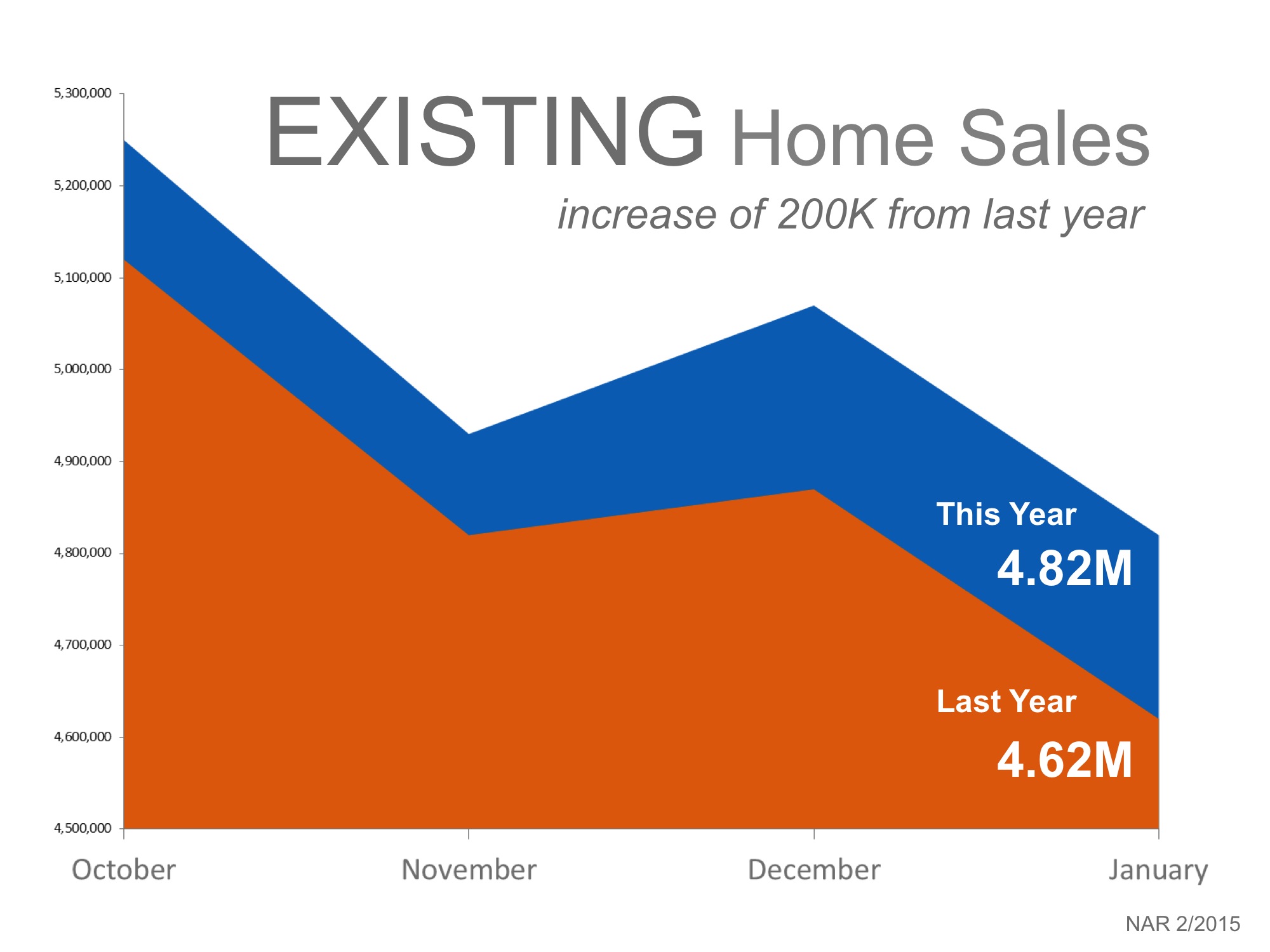
Let’s take a closer look at what the report really shows. There is a seasonality to home sales that happens every year, with a decline in January, (as shown in the graph below.) But in reality 200,000 more homes (3.2%) sold this January over last January.
Existing Home Sales Year-over-Year | Simplifying The Market

The demand for housing hasn’t been a challenge.

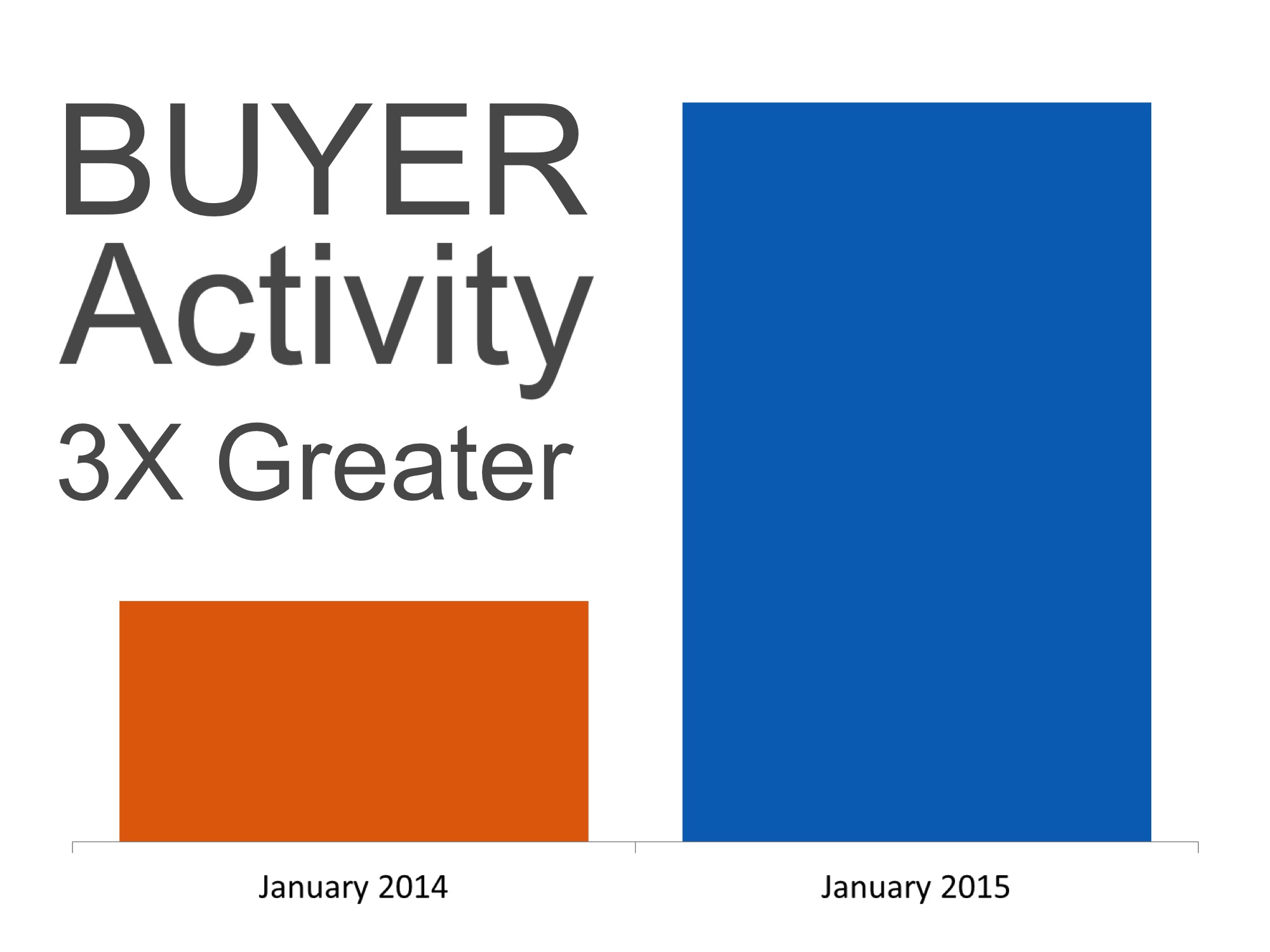
Current buyer demand, as shown in the graph below, is actually 3x greater than that of January 2014.
Buyer Activity | Simplifying The Market
NAR’s Chief Economist, Lawrence Yun points to the real issue at hand:
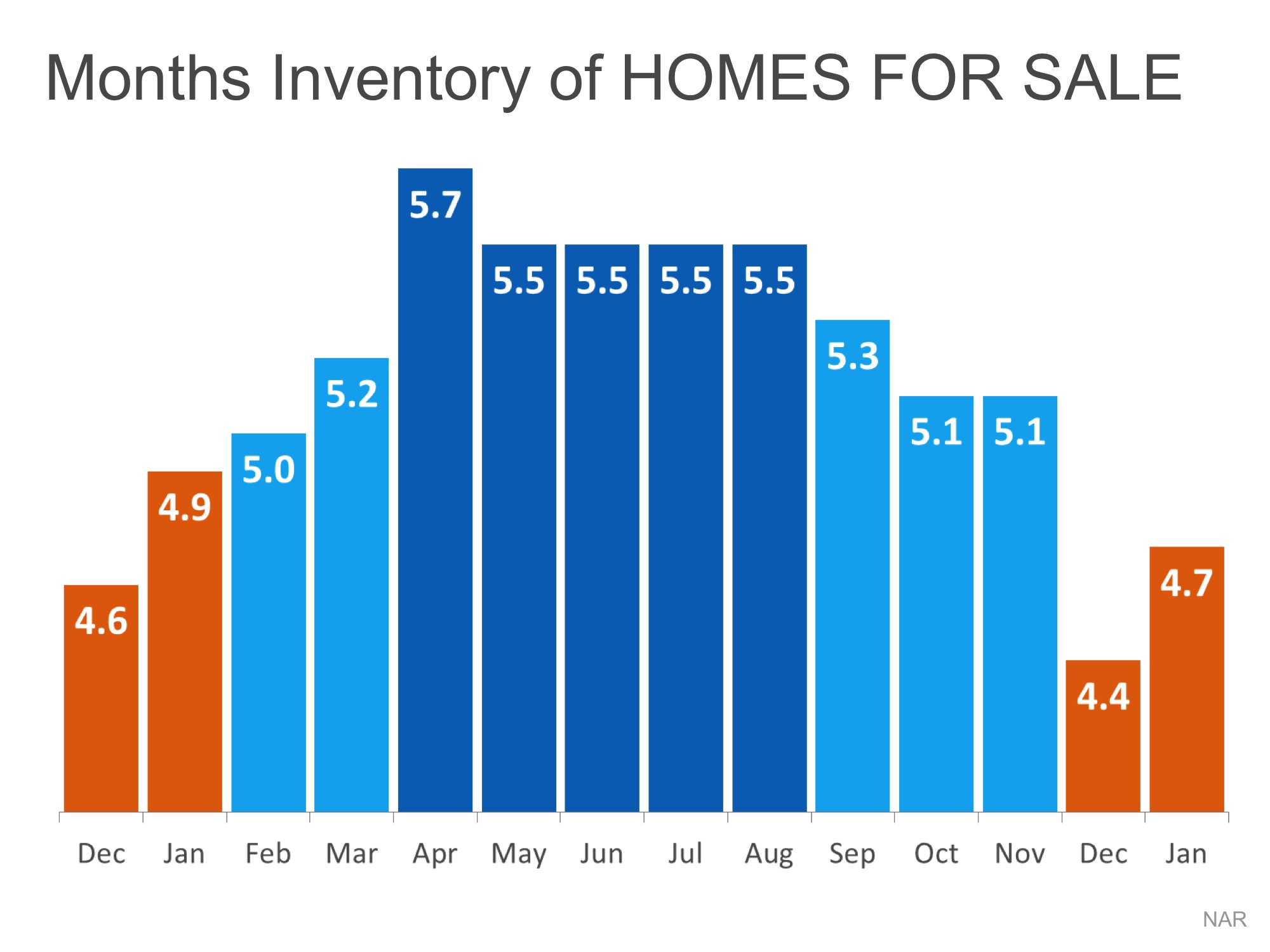
“Realtors® are reporting that low rates are attracting potential buyers, but the lack of new and affordable listings is leading some to delay decisions.”
Months Inventory of Homes For Sale | Simplifying The Market
Even though buyers are out looking for their dream home, they cannot find it! Inventory levels increased slightly since December, but are still below historic norms and unable to keep up with the elevated demand.

Bottom Line

If your plan for 2015 includes selling your house, waiting till the Spring may not be in your best interest. Meet with a local real estate professional in your market who can explain the opportunities available now.
Contact Jerry Gusman
The Gusman Group, 888-213-4208
jerryggroup@aol.com

Tuesday, February 17, 2015

Analyst Says Nation’s 5.6 Percent Unemployment Rate is Misleading, Holding Back Housing Market Recovery

Gallup Unemployment Rate Housing Recovery


While the Obama Administration is touting monthly job gains consistently averaging more than 200,000 and a labor market that they say is at its healthiest level since the turn of the century, at least one analyst says that the recently reported national unemployment rate of 5.6 percent may not be telling the complete story.
Jim Clifton, chairman and CEO of polling firmGallup, claims in a story on the Gallup website blog entitled "The Big Lie: 5.6 Percent Unemployment" that this figure is misleading, and he spells out why he believes that way.
The nation's unemployment rate has particular meaning for the housing industry because economists and analysts have repeatedly stated that housing recovery depends on economic recovery, and vice versa – and that housing recovery depends in particular on a healthy combination of consistent job gains and wage growth. In fact, many analysts have predicted that millennials (age 25 to 34) will drive housing recovery in the next year, thus making employment among that demographic imperative.
"Right now, we're hearing much celebrating from the media, the White House and Wall Street about how unemployment is 'down' to 5.6 percent," Clifton wrote, referring to the rate the Bureau of Labor Statistics reported for December that actually ticked up to 5.7 percent in January. "The cheerleading for this number is deafening. The media loves a comeback story, the White House wants to score political points and Wall Street would like you to stay in the market."
Clifton asserts that the 5.6 percent unemployment rate is not a true representation of the percentage of unemployed workers nationwide because it doesn't include people who have given up looking for a job – or in his words, "While you are as unemployed as one can possibly be, and tragically may never find work again, you are not counted in the figure we see relentlessly in the news – currently 5.6 percent."
About 30 million Americans are either out of work or severely underemployed, according to Clifton. When the number of Americans in "good jobs" is calculated – or in other words, the number of Americans who have a job with an organization that puts them to work for 30 or more hours a week and provides them with a regular paycheck – that number is a staggeringly low 44 percent, Clifton said.
Another reason why the 5.6 percent unemployment figure is misleading, according to Clifton, is that it does not include those who work part-time and want to work full-time.
"There's no other way to say this. The official unemployment rate, which cruelly overlooks the suffering of the long-term and often permanently unemployed as well as the depressingly underemployed, amounts to a Big Lie," Clifton wrote. "And it's a lie that has consequences, because the great American dream is to have a good job, and in recent years, America has failed to deliver that dream more than it has at any time in recent memory. A good job is an individual's primary identity, their very self-worth, their dignity – it establishes the relationship they have with their friends, community and country. When we fail to deliver a good job that fits a citizen's talents, training and experience, we are failing the great American dream."
In January, when the BLS announced the 5.6 percent unemployment rate for December, Fannie Mae chief economist Doug Duncan noted that the labor force participation was at 62.7 percent – its lowest level since 1977.
"So far, the diminishing slack in the labor market has not yet translated into stronger wage gains, which sends a disappointing signal to the housing market," Duncan said. "We fear that housing may, again, lag the progress of the overall economy this year. . . While we expect economic growth to strengthen to an above-par pace this year, our view for the housing market remains cautious, as we believe that meaningful income growth needs to occur to spur household formation, which has been frustratingly anemic in the current economic expansion."
For more information contact
Jerry Gusman, The Gusman Group
888-213-4208
jerryggroup@aol.com

Monday, January 26, 2015

Can HAMP Borrowers Absorb Higher Payments When Loan Mods Reset?

HAMP Re-Defaults

Approximately half a million homeowners who received a mortgage loan modification in 2010 through the government's Home Affordable Modification Program, commonly known as HAMP, are due to reset in 2015 – and those homeowners will be facing slowly increasing monthly mortgage payments.
Will these homeowners be able to handle the payment increases, or will there be a massive wave of re-defaults?
The U.S Department of Treasury and Department of Housing and Urban Development (HUD) launched HAMP in 2009 as part of its Making Home Affordable initiative to provide relief for homeowners facing financial hardship by reducing monthly payments to affordable levels through lowered interest rates and modified loan terms. The goal of the modifications was to reduce monthly payments to about 31 percent of the homeowner's income. According to Mark McArdle, Chief Homeownership Preservation Officer at Treasury, HAMP has saved distressed homeowners an average of about $547 per month (about 39 percent) on mortgage payments by lowering their interest rate in many cases to 2 percent.
There are some who are not sold on the effectiveness of HAMP. One of those is Bankrate.com Chief Financial Analyst Greg McBride, who said in 2009 that homeowners receiving a modification through HAMP were simply "kicking the can down the road" and now that we are in 2015, "we're at the end of the road" because of all the HAMP mods due to reset this year. Furthermore, he said he thinks many homeowners will be "shocked" to find out that "permanent didn't really mean permanent" and instead meant five years.
"What happens is that payment starts to normalize – that 2 percent increases by 1 percentage point per year," McBride said. "So what's going to happen is these homeowners are going to see their mortgage payments go up this year, next year, and in many cases, the year after that. That's where the potential problem is. Household incomes have been stagnant and many homeowners don't have the additional room in their budget to absorb higher payments. Even if they can absorb the first payment increase, the cumulative increase of payments in subsequent years could prove problematic."
Just how problematic will the interest payment increases be? That remains to be seen, but even without the interest increases, re-default rates on HAMP mods have hovered around 40 percent for mods with a 2010 vintage.
As of the end of Q3 2014, the latest data available, HAMP has helped about 1.4 million distressed homeowners receive permanent loan modifications.  Of the approximately 60,000 permanent modifications completed in 2009, the first year of HAMP, about 42 percent of those modifications were 90 or more days delinquent 42 months after the modification became permanent. Of the nearly 511,000 HAMP modifications with a vintage of 2010, that percentage was about the same for those with a 2009 vintage – about 41 percent. That is double the percentage of overall 90-day delinquency rate of all HAMP mods completed through the second quarter of 2013, which is 20 percent.
Treasury has been considering the possibility of re-defaults on HAMP mods and has ways of helping those borrowers for years.
"In addition, we are looking at whether financial counseling for borrowers at the beginning of a modification can be effective in reducing re-default risk," McArdle wrote in 2013. "While re-default remains an unfortunate outcome for some borrowers, clearly without HAMP, national foreclosures rates would have been much higher and many borrowers would not have received the assistance they needed. HAMP continues to be the strongest available program for mortgage modifications. Receiving assistance through HAMP gives homeowners a valuable opportunity to strengthen their financial footing and stay in their homes."
McArdle said that only a small percentage of borrowers who re-default on HAMP mods actually go into foreclosure. Many who re-default are later able to find solutions to avoid foreclosure.
"Of those homeowners who have not been able to keep up with their modified payments under HAMP, the majority have received other forms of assistance or reinstated or paid off their mortgage loans," McArdle wrote. "HAMP requires servicers to reach out to any homeowner who falls behind on a modification to review all other assistance options, before the servicer starts foreclosure proceedings."
McArdle is scheduled to be a panelist on the "Modifying Modifcation" panel at the upcoming Five Star Government Forum in Washington, D.C. on March 18. This panel will assess HAMP and its effect on stabilizing the housing market and assisting distressed homeowners.
With regard to the possibility of re-default, McArdle said Treasury is ready.
"Treasury will maintain its oversight of participating servicers," McArdle said in a note to servicers last March. "We will monitor the interest rate resets to ensure that if signs of homeowner distress arise, servicers are ready and able to help by providing loss mitigation options and alternatives to foreclosures."
McBride said although there will be HAMP re-defaults, it will likely not trigger a housing bust similar to the one the country experienced seven years ago.
"The numbers aren't that big relative to what we saw during the housing bust and it's spread out over a period of several years, so it's not coming all at once," McBride said.
For more information contact
Jerry Gusman, The Gusman Group
888-213-4208
jerryggroup@aol.com

Wednesday, January 21, 2015

Freddie Mac: Households, Businesses Should Take Advantage of Positive Housing Opportunities While They Last

Freddie Mac Housing and Economic Outlook

Freddie Mac cited a number of positive opportunities for housing to start 2015, but households and businesses should take advantage of them because those opportunities may be limited, according to the GSE's January 2015 U.S. Economic and Housing Market Outlook released on Tuesday.
Among the positive tailwinds for housing to start the year are the refinancing opportunities available. Among conventional 30-year fixed mortgage agency mortgage-backed securities (MBS), $361 billion had a 4.5 percent coupon and another $479 billion had a coupon higher than 4.5 percent. Many of those MBS had a rate higher than 5 percent, giving borrowers a strong incentive to refinance at the current 30-year fixed annual rates, which averaged a below-expected 4.17 percent in Freddie Mac's latest Primary Mortgage Market Survey.
The most important positive tailwind for housing, however, is job growth. Payrolls increased by an average of 246,000 per month in 2014 compared to just 194,000 per month in 2013, according to the Bureau of Labor Statistics. The unemployment rate fell by the course of 1.1 percentage points during the course of 2014 down to its latest reported rate of 5.6 percent for December, the lowest level it has been in six and a half years. The drop in unemployment rate over 2014 reduced the amount of unemployed persons in the United States by 1.7 million, according to BLS.
It was not such a positive year for wage growth, however, as wages increased by only 1.7 percent, barely keeping up with inflation, according to BLS. However, the latest Conference Board Consumer Confidence Index in December reported the highest level of consumer confidence since February 2008. Lower gas prices have also given American consumers anywhere from a $125 to $200 billion stimulus, according to economists' estimates.
"On balance there are a lot of positive opportunities in the U.S. economy at the start of the year, and the real question is whether or not households and businesses will be able to seize these opportunities and make the most of them," said Frank Nothaft, Freddie Mac VP and chief economist. "The reprieve in interest rates and drop in gas prices should help to spur economic growth. Until rates start to rise later in the year, housing markets should respond positively and we anticipate increases in home sales and continued improvement in construction activity. With rates lower at the beginning of the year, we'll see higher than expected refinance volumes as well."
The report stated that households and businesses should take advantage of these positive opportunities now, because they may not last. Unexpected weakness in the global economy and uncertainty in foreign markets has resulted in a flight to the relative safety of the U.S. Treasury, which in turn has resulted in lower mortgage interest rates and gas prices as well as a drop in inflation domestically.
"Over time the global economy should stabilize and many of these trends may reverse themselves," Nothaft wrote in the report. "In addition, domestic economic policy, particularly by the Federal Reserve, has the potential to affect interest rates. We expect to see the relatively low interest rates of the past few weeks persist for the first two quarters of the year, but then start to move higher in the second half."
The refinance share has been adjusted higher by 9 percent due to lower-than-expected mortgage rates, according to Freddie Mac. Much of the increase in refinance share can be attributed to the spike in refi activity.
"The economy has a great opportunity to expand in 2015," Nothaft wrote. "The reprieve in interest rates and drop in gas prices should help to spur economic growth. Until rates start to rise later in the year, housing markets should respond positively and we anticipate increases in home sales and continued improvement in construction activity. With rates lower at the beginning of the year, we’ll see higher than expected refinance volume, but expect refinance volume to drop quickly as rates rise."
For more information contact
Jerry Gusman, The Gusman Group
888-213-4208
jerryggroup@aol.com